



































Delegated staking has become a key method for blockchain users to support networks while earning passive income. On Constellation Network, this model recently became accessible to the entire ecosystem through the launch of Tessellation V3. This upgrade introduced a streamlined and feeless delegation process that allows anyone holding DAG tokens to contribute to network validation.
This article provides a comprehensive look at Constellation delegated staking. It explains the system’s design, how Tessellation V3 enables delegation, how to participate, and how it compares to staking models on other networks like Cosmos, Polkadot, and Ethereum.
The Tessellation v3 network upgrade was successful and our Delegated Staking feature is now live on the Mainnet: https://t.co/c9WVFInCKs
— Constellation Network (@Conste11ation) May 20, 2025
You can find a user guide on our documentation hub here: https://t.co/e99gJt1LI8
A video walkthrough can be found here:…
Tessellation V3: The Path to Community Staking
Tessellation is the name of Constellation’s consensus engine and validator node infrastructure. In May 2025, the network launched Tessellation V3, introducing major upgrades to support decentralized validator participation and delegated staking.
Key changes included:
- Validator Enablement: Node operators could now run permissionless validator nodes by bonding 250,000 DAG.
- Delegation Support: Token holders could delegate to validators without running infrastructure.
- New Transactions: Tessellation introduced several new transaction types that significantly expand what users and developers can do on the network and enable staking-specific transactions to support protocol-level delegation logic.
- Reward Engine: A new staking reward structure allowed fair distribution between node operators and delegators.
These upgrades aligned with Constellation’s long-term goal of scaling its validator set beyond the initial 120 nodes and decentralizing its consensus layer.
How Delegated Staking Works on Constellation
Constellation delegated staking allows users to lock their DAG tokens to support a validator node. In return, users earn a combination of fixed and inflationary rewards. Unlike other chains, this system is built natively into the protocol—without smart contracts or external delegation pools.
When you delegate tokens, you create a TokenLock transaction. This lock immobilizes your DAG and assigns staking weight to the selected validator. Validators with more stake—including delegated stake—gain more influence in the consensus process and receive a larger share of emissions.
The rewards structure consists of:
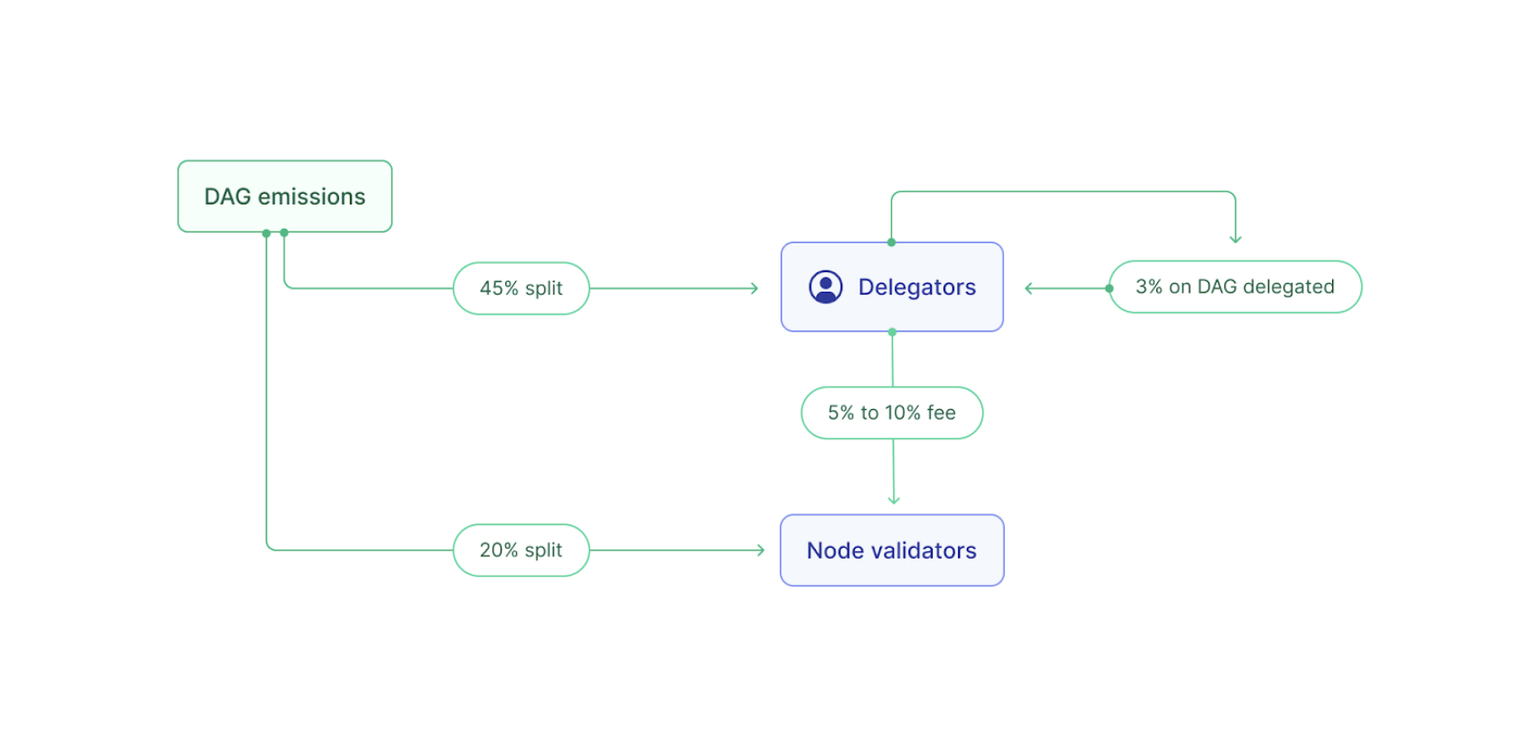
- A fixed 3% APR on staked DAG.
- A share of 45% of network inflation rewards distributed based on staking weight.
- Optional L0 token incentives from Metagraph projects tied to the validator.
Delegators retain full custody of their tokens and can switch validators at any time. The only restriction is a 21-day lock-up period when undelegating funds.
Validator Requirements and Delegator Incentives
To support delegated staking on Constellation Network, node operators must meet several key requirements. The most important is staking 250,000 DAG as locked collateral. This self-stake ensures that validators remain aligned with the network’s goals and act responsibly. Only nodes with this bonded amount can participate in consensus and receive rewards.
Node operators must also take a one-time action to opt into supporting delegation. They do this by configuring their node through a simple command in the nodectl tool. Once delegation is enabled, the setting cannot be reversed. However, there is no downside to enabling it. Validators continue to earn all rewards on their own 250,000 DAG stake and gain additional rewards from delegator contributions.
Each validator sets a commission rate, typically between 5% and 10%. This rate determines how much of the rewards from delegated tokens the validator keeps. The remaining 90–95% goes to the delegators. This structure encourages validators to remain competitive, perform reliably, and offer value to their backers.
Delegators benefit from the validator’s participation in consensus and share in the rewards it earns. They do not need to run any infrastructure or manage any technical processes. Their role is to select a validator, delegate DAG, and monitor performance over time. Some validators also support specific Metagraph projects and may offer additional L0 token rewards to their delegators.
Together, this model incentivizes strong validator performance while making it easy for token holders to participate in staking.
How to Delegate DAG: Step-by-Step Guide
Getting started with Constellation delegated staking is simple. Follow these steps:
- Install Stargazer Wallet: This is the official wallet for holding and staking DAG. It supports delegation and connects to DAG Explorer.
- Connect to DAG Explorer: Go to https://dagexplorer.io/ and connect your wallet.
- Choose a Validator: Review available validators based on commission rate, uptime, and community support.
- Delegate Your DAG Tokens: Select a validator, enter the amount of DAG to stake, and confirm the transaction. No gas fees are required.
- Track Rewards: Monitor your rewards and validator performance directly in the Explorer or wallet interface.
- Switch or Undelegate: Reassign your stake at any time with no penalty. To withdraw, initiate undelegation and wait the 21-day unlock period.
There is no minimum amount required to delegate. Even small holders can participate and earn yield.
What Makes Constellation Delegated Staking Different
Several design choices make Constellation delegated staking unique in the blockchain space.
- No Transaction Fees: Staking, switching, and withdrawing involve no gas costs.
- No Slashing for Delegators: If a validator misbehaves, only their 250k bonded stake is at risk. Delegators lose rewards during downtime but never principal.
- Instant Validator Switching: Users can change validators at will without waiting periods or penalties.
- Optional Multi-Token Rewards: Some validators offer rewards in L0 tokens from Metagraph projects.
- Feeless Auto-Compounding: Rewards accrue automatically and compound over time.
These features reduce friction and make staking accessible for all users—not just technically advanced ones.
Comparing Constellation to Other Staking Models
| Feature | Constellation | Cosmos | Polkadot | Ethereum | Liquid Staking | Exchange Staking |
|---|---|---|---|---|---|---|
| Node Required | No | No | No | Yes (32 ETH) | No | No |
| Slash Delegators | No | Yes | Yes | No | Yes | Hidden |
| Gas Fees | None | Low | Low | High | Varies | Yes |
| Rewards | DAG + L0 tokens | ATOM | DOT | ETH | stTokens | Varies |
| Flexibility | High | Medium | Medium | Low | High | Medium |
| Min Stake | None | None | Dynamic | 32 ETH | Varies | Varies |
Cosmos offers high yields but penalizes delegators for validator faults. Polkadot uses nomination pools but still slashes nominators under certain conditions. Ethereum requires third-party solutions for delegation and has complex slashing logic.
Liquid staking provides liquidity but often involves smart contract risk and centralized intermediaries. Centralized exchange staking is easy but sacrifices token custody and transparency.
Constellation minimizes complexity while offering a hybrid reward model, strong user protection, and zero fees.
Best Practices for Stakers
To maximize your staking experience:
- Choose validators with strong uptime and reputation.
- Look for L0 token rewards tied to Metagraph projects.
- Don’t delegate tokens you need within 21 days.
- Reassign your stake if validator performance declines.
- Monitor staking metrics using DAG Explorer.
Since delegators avoid slashing, the main risk is opportunity cost during validator downtime.
Shoutout to all the @Conste11ation community members helping us test delegated staking!
— João (@joaopfc) May 12, 2025
I am loving the enthusiasm, dedication and suggestions!
If we can use this group as a sample of whats going to happen when we go live then brace yourselves for all the $DAG that will be…
A Community-Driven Model for the Hypergraph
With Tessellation V3, Constellation transitioned from a closed validator model to a system that welcomes every wallet to contribute. Over 40,000 wallets are now eligible to earn rewards through delegated staking.
By lowering the technical barrier and removing staking penalties for delegators, Constellation creates an inclusive and robust ecosystem. Whether you’re a casual holder or an active participant, delegated staking offers a meaningful way to support the network while earning consistent yield.
To get started, download Stargazer, visit DAG Explorer, and choose a validator that aligns with your goals. You’ll help power a decentralized network built for data, scalability, and community ownership.
*Disclaimer: News content provided by Genfinity is intended solely for informational purposes. While we strive to deliver accurate and up-to-date information, we do not offer financial or legal advice of any kind. Readers are encouraged to conduct their own research and consult with qualified professionals before making any financial or legal decisions. Genfinity disclaims any responsibility for actions taken based on the information presented in our articles. Our commitment is to share knowledge, foster discussion, and contribute to a better understanding of the topics covered in our articles. We advise our readers to exercise caution and diligence when seeking information or making decisions based on the content we provide.